How to climb from lowest to highest rank in Valorant using iiTzTimmy's challenge approach
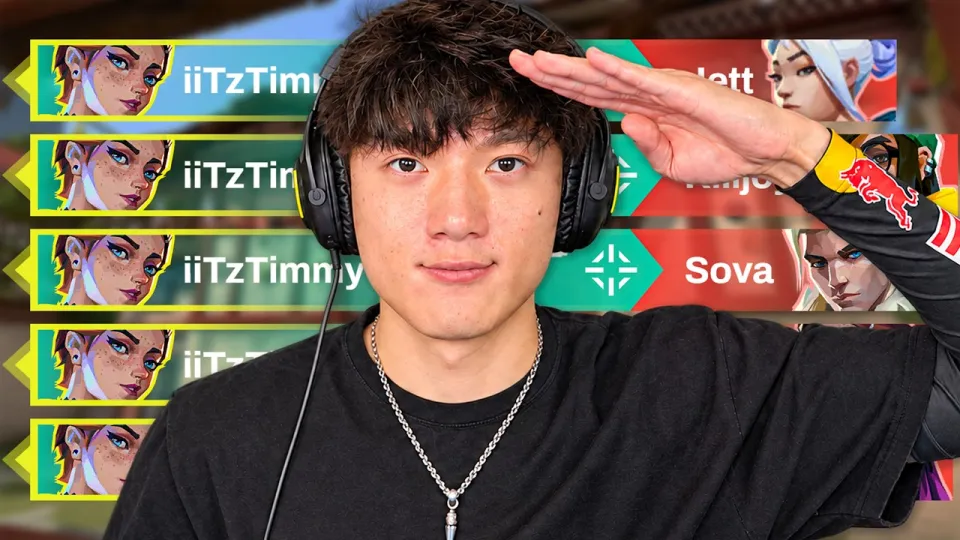
Video: I Might Be Getting TOO Good at Valorant… (Lowest To Highest Rank Challenge)
You can order the same kind of articles for your own video to boost it on YouTube and Google. Just message the Telegram bot @sat_sit_bot. The bot writes and publishes the articles itself (with your YouTube video embedded) on popular topical websites (no ads). Free trial — 50 articles.
· based on the channel iiTzTimmy Two
Climbing from the lowest rank to the highest in Valorant requires more than raw aim: it demands mental discipline, clear comms, and the ability to adapt to unpredictable teammates and opponents. iiTzTimmy's lowest-to-highest rank challenge on the iiTzTimmy Two channel shows exactly how a top-tier player navigates the chaos of low-elo lobbies while keeping his own performance consistent. You can watch the full stream live on Twitch to see the unedited climb.
What the lowest to highest rank challenge in Valorant actually tests
The challenge puts a high-level player into the lowest possible rank and tasks him with reaching the top, which exposes the real barriers that keep average players stuck. It is not just about smurfing highlights; it is a stress test of patience, communication, and decision-making when teammates and enemies behave erratically. In the first game, a Cypher player becomes the perfect example of a broken mental: he makes questionable plays, nitpicks his team, invents comms that were never said, and tilts over not hearing information. That behavior turns a winnable match into a loss faster than any aim diff. Meanwhile, a Reyna on the same team turns out to be the sensible voice, proving that leadership has nothing to do with the agent you pick. For anyone climbing in 2026, the lesson is clear: fix your mental before you blame your rank.
Why mental resilience matters more than aim in low elo
Mental resilience is the single most transferable skill from this challenge, because low-elo games are decided by who tilts first. The Cypher from the opening match is a textbook case: he gets frustrated about missing comms, starts criticizing every teammate action, and even fabricates callouts in his own head. That mindset leads to forced duels, abandoned sites, and a loss that had nothing to do with mechanics. A simple routine helps: mute toxic players early, focus on your own win condition, and treat every round as a fresh start. The Reyna who stayed calm and made sensible calls shows that composure is contagious. If you want to climb from Iron or Bronze, spend as much time reviewing your emotional reactions as your crosshair placement.
How to handle desperate opponents and clout chasers
When a known streamer enters a low-rank lobby, opponents often abandon normal play and desperately hunt for a highlight, which creates predictable over-aggression you can punish. In the second game of the challenge, enemies swarm iiTzTimmy's Clove with reckless pushes, trying to prove themselves against a famous player. That behavior is exploitable: hold angles, bait their aggression, and let them run into your team's setup. The same principle applies in regular ranked games when you face a smurf or a boosted player: identify who is over-extending and adjust your positioning. Instead of matching their chaos, slow the round down and force them to make the first mistake.
What viewers noticed: bugs, settings, and funny moments
The community around the video raised several practical questions, from a possible ult bug to sensitivity settings and even a fake AFK play. One viewer pointed out that after killing Clove, the ultimate meter did not activate as expected, which could be a genuine bug worth reporting to Riot. Others asked about the streamer's sensitivity and DPI, a common request from players looking to replicate a pro's setup. There was also appreciation for a ridiculous flick where only a sliver of the enemy's hitbox was visible, and amusement at a fake AFK that fooled opponents. These moments show that even in a serious climb, entertainment and learning go hand in hand. For settings, there is no magic number: start with a DPI around 400–800 and an in-game sensitivity that lets you do a 180-degree turn comfortably, then adjust based on your mousepad space.
Step-by-step approach to replicate the climb
You can apply the challenge's structure to your own ranked journey by following a few concrete steps:
- Start with a fresh account or a focused session where you only play one or two agents, so you master their utility and recoil.
- Set a rule: no typing to argue, only voice comms for useful information, and mute anyone who becomes toxic.
- Review one lost round per game to identify whether the mistake was mechanical, positional, or mental.
- Warm up for 10–15 minutes in Deathmatch or Aim Labs before queuing, especially if you are below Gold.
- Track your average combat score and first-blood rate over 20 games to see if your impact is actually improving.
These steps mirror what a Radiant-level player does naturally, and they work at any rank because they build consistency rather than relying on lucky streaks.
Useful links from the stream
- Watch live: https://www.twitch.tv/iiTzTimmy
- Twitter: https://twitter.com/iiTzTimmy
- Instagram: https://www.instagram.com/iiTzTimmy/
- TikTok: https://www.tiktok.com/@iiTzTimmy
- Discord: https://discord.gg/iitztimmy
Final takeaway
The lowest-to-highest rank challenge is more than a highlight reel; it is a case study in how attitude, adaptability, and small decisions separate climbers from stuck players. iiTzTimmy Two presents the run with enough raw moments to see both the brilliance and the tilt that come with competitive Valorant. If you take one thing from it, let it be the focus on your own mental and comms before you blame teammates or the matchmaking. For the full experience, catch the next stream on Twitch and follow the channel for more ranked experiments.
Key takeaways
- iiTzTimmy Two's challenge runs a fresh account from the lowest rank to the highest, showing how a Radiant-level player adapts to chaotic lobbies.
- The first game's Cypher tilts over missing comms and blames teammates, illustrating how bad mental wrecks winnable games.
- A Reyna player becomes the sensible voice of the team, proving that agent pick doesn't dictate leadership.
- In the second game, opponents desperately chase clout against a known streamer, creating predictable over-aggression.
- Viewers note a potential bug where the ult meter doesn't activate after a kill, and ask about sensitivity and DPI settings.
Source: I Might Be Getting TOO Good at Valorant… (Lowest To Highest Rank Challenge) · Markdown version
Questions & answers
What is the lowest to highest rank challenge in Valorant?
It is a personal challenge where a high-level player starts on a fresh account in the lowest rank and attempts to climb to the highest rank, usually Radiant. The format tests adaptability, mental resilience, and consistency across chaotic low-elo lobbies. Streamers like iiTzTimmy use it to show how top-tier decision-making translates when teammates and opponents behave unpredictably.
How can I improve my mental game in Valorant ranked?
Start by muting toxic players early and focusing only on your own win conditions each round. Avoid arguing in chat and treat every round as a fresh start. Reviewing lost rounds for mental mistakes, not just aim errors, helps build the discipline needed to climb. The Cypher from the video is a clear example of how tilting over comms destroys team cohesion.
What sensitivity and DPI should I use to aim like a pro?
There is no universal setting, but most pros use a DPI between 400 and 800 with an in-game sensitivity that allows a comfortable 180-degree turn. Test your setup in the range or Deathmatch and adjust until you can track heads smoothly without running out of mousepad space. Consistency matters more than copying a specific number.
Is there a bug with Clove's ultimate in Valorant?
Some viewers noticed that after killing Clove, the ultimate meter did not activate as expected, which could indicate a bug. If you encounter similar behavior, record the clip and report it to Riot support. Bugs like this are rare but can affect round outcomes, so staying informed about patch notes is useful.